Automate and Control LTD

Blog

  • Automate and Control’s AI Driven Machine Vision Systems for the Food Industry. How does Machine Learning benefit our customers.

    Revolutionizing Food Industry Operations with Chaos AI Vision Systems

    Harnessing the Power of Artificial Intelligence for Seamless, Future-Proof Automation

    At Automate and Control, we are excited to introduce our cutting-edge Chaos AI Vision Systems tailored for the food industry. These systems are not just another technological gimmick; they represent the very core of artificial intelligence integrated into robust machine vision solutions.

    AI at the Core: Future-Proofing Your Operations

    The term “AI” often buzzes through the tech landscape, yet at Automate and Control, it signifies a profound transformation. Our Chaos AI Vision Systems are built around a core of advanced AI, ensuring that they are not just solutions for today but are future-proof for the evolving demands of the food industry. With our AI-driven systems, the dependency on highly trained vision software engineers is a thing of the past. Now, even operators with basic technical know-how can set up and manage complex applications, thanks to our intuitive, machine-learning enhanced setup systems.

    Empowering Operators with Simple, Powerful Tools

    Our vision systems come equipped with user-friendly interfaces that allow operators to easily configure and deploy new applications. This shift from engineer-dependent setups to operator-led configurations reduces setup times and operational downtime, thereby increasing efficiency and reducing costs. The built-in machine learning capabilities ensure that the system continuously learns and adapts, improving its accuracy and functionality with each use.

    Comprehensive Capabilities for the Food Industry

    The Chaos AI Vision Systems are designed to handle a wide array of tasks critical to the food industry:

    • Variable Data Checking: Ensure all product data matches across batches.
    • Random Packed Product Identification: Easily identify and sort products regardless of their packing arrangement.
    • Barcode and QR Code Inspection: Maintain accuracy in code reading to support tracking and distribution.
    • Quality Grading: Automatically assess product quality to ensure only the best items reach consumers.
    • Anomaly Detection: Quickly spot and address deviations from the norm, preventing potential issues before they escalate.
    • Labeling and Date Coding: Check for missing or incorrect labels and date codes, crucial for regulatory compliance and consumer safety.

    Robust Remote Support for Uninterrupted Operations

    Understanding the critical nature of food industry operations, our Chaos AI Vision Systems are backed by comprehensive remote support. This ensures that any operational hiccups can be swiftly and efficiently resolved, maintaining high uptime and productivity. Our expert team can remotely diagnose and rectify issues, reducing the need for on-site visits and further ensuring that your operations run smoothly around the clock.

    Seamless Integration with Upstream and Downstream Equipment

    At Automate and Control, we understand that the effectiveness of our Chaos AI Vision Systems extends beyond their standalone capabilities. Integration with existing production lines and systems is crucial for maximizing efficiency and effectiveness in the food industry. Our vision systems are designed with advanced protocol support to seamlessly communicate with both upstream and downstream equipment, such as sealing, coding, and weighing machines.

    Advanced Protocol Support for Diverse Equipment

    Our Chaos AI Vision Systems support a multitude of protocols, ensuring they can easily connect with various types of production equipment. This interoperability is key to streamlining production processes and enhancing the synchronization between different stages of production. Whether it’s integrating with older legacy systems or the latest in automation technology, our systems are equipped to handle:

    • Industrial Network Protocols: Including but not limited to Ethernet/IP, Modbus TCP, PROFIBUS, and PROFINET, ensuring that our systems can communicate effectively across the most widely used industrial networks.
    • Standard Communication Interfaces: Support for USB, RS-232, RS-485, and wireless communications facilitates flexible connectivity options.

    Enhanced Production Line Efficiency

    By integrating our Chaos AI Vision Systems with sealing machines, for instance, operators can ensure that once the AI system identifies and confirms the quality of packaged goods, the information can directly trigger the sealing process without manual intervention. Similarly, integration with coding and weighing equipment allows for a streamlined workflow where products are inspected, weighed, and coded in one smooth, continuous process, reducing handling times and minimizing the risk of errors.

    Real-Time Data Sharing and Process Optimization

    Our integrated systems allow for real-time data sharing between equipment, enabling immediate adjustments and process optimization. For example, if the vision system detects a discrepancy in product weight, this information can be instantly relayed to the weighing equipment to re-calibrate and correct future measurements. This capability not only enhances accuracy but also significantly improves the overall productivity and efficiency of the production line.

    Customizable Integration Solutions

    Recognizing that each production facility has unique needs, Automate and Control offers customizable integration solutions. Our team works closely with clients to assess their specific equipment and integration requirements, ensuring that the implementation of our Chaos AI Vision Systems enhances overall operational flow and meets the specific needs of each facility.

    Conclusion: A Smarter Way to Automate

    At Automate and Control, we believe in leveraging technology to make industrial operations not just automated but smartly automated. Our Chaos AI Vision Systems embody this philosophy by providing the food industry with a powerful, intelligent tool that is simple to use, future-proof, and capable of handling multiple complex tasks efficiently. Embrace the future of food industry automation with us and ensure your operations are not just running, but running at their optimal best.

    With Chaos AI Vision Systems, the promise of a fully integrated, highly efficient production line is now a reality. By supporting a multitude of protocols and offering seamless integration with a variety of upstream and downstream equipment, our systems not only enhance individual processes but also transform the entire production ecosystem. Step into the future of integrated automation with us and experience unparalleled efficiency and productivity in your food industry operations.

    Visit us at automateandcontrol.com to learn more about how our Chaos AI Vision Systems can transform your food industry operations today.
  • Hyperspectral Imaging in Food Safety

    Hyperspectral Imaging and Food Safety

    Hyperspectral Imaging and Food Safety: A Comprehensive Analysis

    Introduction

    Food safety is a critical global issue, impacting public health and economic stability. Hyperspectral imaging (HSI) has emerged as a transformative technology in this area, offering unprecedented precision in detecting contaminants and assessing food quality. HSI’s ability to analyze the chemical and physical properties of foods non-invasively is revolutionizing food safety protocols and enforcement.

    Fundamentals of Hyperspectral Imaging

    Technical Specifications: Cameras and Sensors

    Hyperspectral cameras utilize CCD or CMOS sensors to capture data across hundreds of spectral bands. CCD sensors are known for their high-quality images and low noise, while CMOS sensors offer faster processing times and lower power consumption.

    Dale, 2021

    Key Differences from Multispectral Imaging

    Hyperspectral imaging captures a continuous spectrum for each pixel, offering more detailed data than multispectral imaging, which captures only discrete bands and is less detailed.

    Johnson and Finkelstein, 2020

    Hyperspectral Imaging in Food Inspection

    HSI’s detailed spectral data enables precise identification of organic and inorganic materials, enhancing food safety by detecting pathogens, pesticides, and other contaminants more effectively than traditional methods.

    Smith et al., 2022

    Case Studies

    • A 2021 study published in Food Safety Journal demonstrated how HSI successfully identified E. coli on the surface of fresh produce with 98% accuracy. Chen and Zhao, 2021
    • Another case study involved using HSI to detect foreign bodies in cereal products, where traditional methods failed to identify smaller contaminants. Miller and Brown, 2022

    Hyperspectral Imaging for Process Monitoring in the Food Industry

    Quality Control During Food Packaging

    HSI systems monitor the integrity of food packaging, detecting minute defects that could lead to spoilage or contamination. This application was highlighted in a 2022 study where hyperspectral cameras identified seal defects in meat packaging that were not visible to the naked eye.

    Roberts and Garfield, 2022

    Monitoring Changes in Food During Storage

    Hyperspectral imaging can track the degradation of food products during storage by detecting changes in their spectral signature, predicting spoilage before it becomes visible.

    Liu et al., 2023

    Advantages of Hyperspectral Imaging in Food Safety

    The implementation of HSI technology in food safety offers numerous benefits over traditional methods:

    • Increased Accuracy in Detecting Pathogens and Contaminants
    • Non-destructive Testing and Real-time Analysis Capabilities

    Challenges and Limitations

    High Costs and Complexity

    The high cost of hyperspectral imaging equipment and the complexity of analyzing the data remain significant barriers. These challenges are detailed in a recent market analysis by Global Food Safety Resources (GFSR), which discusses the adoption rates and technological hurdles in implementing HSI in smaller food processing operations.

    Global Food Safety Resources (GFSR), 2022

    Data Management and Processing

    The large datasets produced by HSI require substantial processing power and sophisticated algorithms to be useful in real-time decision-making. This issue was addressed in a recent IEEE publication, which presented a new algorithm designed to speed up data processing in HSI systems.

    Nguyen et al., 2023

    Regulatory Aspects and Compliance

    Regulatory compliance is critical for HSI technology in the food industry. Various standards and protocols must be adhered to, ensuring that hyperspectral imaging systems are reliable and effective. The FDA’s recent guidelines on hyperspectral imaging provide a framework for its application in food safety inspections.

    Food and Drug Administration (FDA), 2022

    Conclusion

    Hyperspectral imaging represents a significant advancement in food safety, offering detailed insights that improve contaminant detection, quality assurance, and regulatory compliance. As technology progresses, its adoption is expected to increase, making it an indispensable tool in the global effort to ensure food safety.

    Future Directions

    Emerging trends include integrating AI with HSI to enhance data interpretation and developing more cost-effective hyperspectral cameras to promote broader usage in the food industry.

  • Transforming Food Safety: The Impact of Hyperspectral Machine Vision Technology by Automate and Control LTD

    Transforming Food Safety: The Impact of Hyperspectral Machine Vision Technology by Automate and Control LTD

    Introduction

    Hyperspectral machine vision systems offer unparalleled precision in detecting defects and contaminants in the food production line. Automate and Control LTD is at the forefront of integrating this technology into food safety processes.

    Understanding Hyperspectral Imaging

    Hyperspectral imaging captures a wide spectrum of light, far beyond what the human eye can see, allowing for detailed analysis of materials based on their molecular composition. This technology is particularly effective in identifying subtle differences and impurities that are invisible to conventional imaging systems.

    Advancements in Food Inspection

    Automate and Control LTD’s hyperspectral systems are revolutionizing how the food industry detects contaminants. By analyzing the spectral data, these systems can identify foreign materials such as plastic or metal, as well as biological hazards like maggots or mold, even in complex visual scenes.

    Broader Industrial Applications

    Beyond food safety, hyperspectral imaging is reshaping various industries including pharmaceuticals, where it’s used for fault detection in pills, and agriculture, for assessing crop health. This versatility underscores the technology’s significant benefits in enhancing product quality and safety across multiple sectors.

    Future Prospects

    The ongoing advancements in hyperspectral imaging promise even greater integration into industrial automation. With improvements in speed and accuracy, the potential applications of this technology continue to expand, promising a future where hyperspectral machine vision is a standard tool in many industries.

    Conclusion

    Automate and Control LTD is not just enhancing food safety but is setting new standards for quality control across industries with its advanced hyperspectral machine vision systems.

  • bioClass® Predictive Shelf Life Technology

    bioClass® Predictive Shelf Life Technology

    REMOVING FOOD WAST AT THE SOURCE

    At Automate and Control, we’re proud to be at the forefront of innovative solutions that make a positive impact on our planet. 🚀 Our latest breakthrough combines cutting-edge grading technology with chemical imaging, originally developed for military and space applications, to revolutionize how we remove consumer food waste before it makes it to the consumer.

    🍏 Predictive Shelf Life Technology: A Game-Changer for Food Waste Reduction

    Our advanced grading solution, powered by chemical imaging, allows us to predict the shelf life of produce with unparalleled accuracy. This means fresher, longer-lasting food that not only ensures consumer safety but also minimizes food waste. 🌽📊

    🌿 Sustainability at the Core

    At Automate and Control, we are committed to sustainability. Our technology not only addresses the pressing issue of food waste but also contributes to a more sustainable future. 🌎 By predicting shelf life, we’re reducing the need for premature disposal and minimizing the environmental impact associated with food waste.

    🔐 Enhancing Food Security

    In an era where food security is a global concern, our solution plays a vital role in ensuring a more reliable and secure food supply chain. 🛡️ By extending the shelf life of produce, we’re helping to mitigate food shortages and contribute to a more resilient food system.

    🌐 Carbon Reduction Through Smart Solutions

    Beyond reducing food waste, our technology has broader implications for carbon reduction. 🌱 By optimizing the shelf life prediction process, we’re minimizing the carbon footprint associated with transportation, food processing, and other waste-related activities. It’s a step towards a greener and more sustainable future.

    🚀 Join us on the Journey Towards a Sustainable Tomorrow

    We invite you to join us in the mission to create a more sustainable and resilient food ecosystem. Together, we can make a significant impact on food waste, enhance food security, and contribute to a healthier planet.

    #AutomateAndControl #FoodWasteReduction #Sustainability #Innovation #CarbonReduction #FoodSecurity #ShelfLifePrediction #TechForGood 🌱✨

  • Enhancing Food Safety with Hyperspectral Food Inspection Systems

    In recent years, the food industry has witnessed an increasing number of product recalls due to potential food safety hazards. The latest incident involves Johnsonville LLC, which has issued a recall for its Beddar Cheddar Ready-to-Eat Pork Sausage Links. Such events highlight the critical need for advanced food inspection technologies that can prevent such issues and ensure consumer safety. This article explores how hyperspectral food inspection systems, developed by Automate and Control LTD, are revolutionizing food safety measures and assisting manufacturers in preventing costly recalls.

    1. Understanding the Impact of Food Recalls: Food recalls can have severe consequences for businesses, including reputational damage, financial losses, and potential legal ramifications. Consumers demand transparency and assurance that the food they consume meets stringent safety standards. To address this, food manufacturers must adopt advanced technologies that can effectively detect potential contaminants and ensure product safety.
    2. The Role of Hyperspectral Food Inspection Systems: Hyperspectral food inspection systems offer a cutting-edge solution to enhance food safety measures. These systems utilize advanced imaging technology, combining spectroscopy and computer vision algorithms, to provide comprehensive analysis of food products. By examining the unique spectral signatures of different materials, hyperspectral cameras can detect contaminants, foreign objects, and even subtle variations in food quality.
    3. Preventing Recalls with Hyperspectral Analysis: Automate and Control LTD’s hyperspectral food inspection systems are designed to identify contaminants that may not be visible to the naked eye. The systems employ real-time imaging and analysis capabilities, enabling swift identification and rejection of contaminated or substandard food products. By implementing these systems in their production lines, manufacturers can significantly reduce the risk of recalls, ensuring that only safe and high-quality products reach consumers.
    4. Optimizing Food Safety Protocols: Incorporating hyperspectral food inspection systems into existing food safety protocols allows for a more comprehensive and efficient inspection process. These systems can be integrated seamlessly into production lines, providing continuous monitoring and real-time alerts in case of any anomalies. This proactive approach empowers manufacturers to address potential issues promptly, mitigating risks and safeguarding consumer health.
    5. Compliance with Industry Regulations: Meeting regulatory requirements is crucial for food manufacturers. Hyperspectral food inspection systems help companies comply with food safety standards and guidelines by providing detailed data and documentation of inspection processes. This not only ensures compliance but also facilitates traceability and assists in audits, ultimately bolstering the company’s reputation and fostering consumer trust.

    In an era where consumer safety and product quality are paramount, hyperspectral food inspection systems have emerged as a game-changer for the food industry. Automate and Control LTD’s state-of-the-art technology enables manufacturers to proactively detect contaminants, minimize the risk of recalls, and deliver safe products to consumers. By embracing these advanced inspection systems, food manufacturers can prioritize food safety, protect their brand reputation, and uphold consumer trust in an increasingly competitive marketplace.

    Learn more about Automate and Control LTD’s hyperspectral food inspection systems. Contact us for a consultation on enhancing food safety in your production line.

    For More information on this safety recall visit https://www.fsis.usda.gov/recalls-alerts/johnsonville-llc-recalls-beddar-cheddar-ready-eat-pork-sausage-links-due-possible

    FSIS Announcement

    WASHINGTON, June 15, 2023 – Johnsonville, LLC, a Sheboygan Falls, Wis. establishment, is recalling approximately 42,062 pounds of ready-to-eat (RTE) “Beddar with Cheddar” pork sausage links that may be contaminated with extraneous materials, specifically very thin strands of black plastic fibers, the U.S. Department of Agriculture’s Food Safety and Inspection Service (FSIS) announced today.

    The RTE pork sausage links were produced on Jan. 26, 2023. The following product is subject to recall [view labels]:

    • 14-oz. vacuum-packed packages of “Johnsonville BEDDAR with CHEDDAR Smoked Sausage links MADE WITH 100% PREMIUM PORK” with a Best By 07/11/2023 C35 code date printed on the back. 

    The products subject to recall bear establishment number “EST. 34224” inside the USDA mark of inspection. This item was shipped to retail locations in Colorado, Iowa, Kansas, Missouri, Nebraska, North Dakota, Oklahoma and Texas.           

    The problem was discovered after the firm received one consumer complaint about the product containing very thin strands of black plastic fibers.

    There have been no confirmed reports of adverse reactions due to consumption of this product. Anyone concerned about an injury or illness should contact a healthcare provider.  

    FSIS is concerned that some product may be in consumers’ refrigerators or freezers. Consumers who have purchased this product are urged not to consume them. This product should be thrown away or returned to the place of purchase.

    FSIS routinely conducts recall effectiveness checks to verify recalling firms notify theircustomers of the recall and that steps are taken to make certain that the product is no longer available to consumers.

    Consumers with questions about the recall can contact Amanda Fritsch, Consumer Relations Coordinator, Johnsonville, LLC, at 888-556-2728 or anachtweyfritsch@johnsonville.com. Members of the media with questions about the recall can contact Stephanie Schafer, Director of Global Corporate Communications, Johnsonville, LLC, at 920-453-4826 or SDlugopolski@johnsonville.com. 

    Consumers with food safety questions can call the toll-free USDA Meat and Poultry Hotline at 888-MPHotline (888-674-6854) or live chat via Ask USDA from 10 a.m. to 6 p.m. (Eastern Time) Monday through Friday. Consumers can also browse food safety messages at Ask USDA or send a question via email to MPHotline@usda.gov. For consumers that need to report a problem with a meat, poultry, or egg product, the online Electronic Consumer Complaint Monitoring System can be accessed 24 hours a day at https://foodcomplaint.fsis.usda.gov/eCCF/.

  • Introducing the Revolutionary bioClass® Hyperspectral Meat and Poultry Foreign Material Food Safety Detection System by Automate and Control LTD!

    Experience the most advanced and sophisticated system available in the market today. Our bioClass® system utilizes cutting-edge sensors that capture hundreds to thousands of color bands per pixel, surpassing the normal range of human vision. With this immense number of bands, our system has the remarkable ability to differentiate the chemical composition of each pixel, even “learning” new chemical signatures over time. Imagine being able to distinguish between same-colored plastics by detecting variations in their chemical makeup. This level of precision is unmatched.

    Unlike other detection systems, our hyperspectral technology offers unparalleled flexibility in identifying a vast array of objects, including those with previously unknown properties. No longer limited by speed or pixel size, recent advancements in detectors and computing power have made hyperspectral inspection feasible for meat and poultry processing applications at line speed. With precise lighting conditions, our bioClass® system ensures accurate and reliable results.

    Here’s how our bioClass® Hyperspectral Meat and Poultry Foreign Material Food Safety Detection System stands out:

    1. Unmatched Resolution: Our system can detect even the smallest particles, with a resolution that surpasses traditional vision systems. By using multiple pixels to resolve objects, we guarantee precise and reliable detection, even in challenging conditions.
    2. Comprehensive FM Detection: While other systems may only detect objects at or near the product’s surface, our bioClass® system can identify foreign material underneath or on the sides of the product. Through additional imaging heads or product presentation methods, we ensure comprehensive coverage.
    3. Versatile FM Detection: Differentiating materials is essential for an effective detection system. Our bioClass® system offers three types of detection:a. Camera Detection: Detects objects with significant contrast or color difference from the product. Whether it’s opaque, dark blue plastic or translucent, light-colored plastic, our system delivers exceptional performance. Uniformity of the product doesn’t hinder detection, making it ideal for various scenarios.b. Multispectral Detection: Outperforms camera systems in low-contrast situations by utilizing selected color bands that correspond to the FM’s chemistry. Even if the visual appearance is similar to the background material, our system can differentiate and detect specific materials. Perfect for well-defined processes with known and cataloged FM.c. Hyperspectral Detection: The epitome of low-contrast detection on complex product surfaces. Our hyperspectral system not only captures color but also analyzes the chemical composition of objects. It can even detect translucent materials and thin films. Additionally, our system can flag foreign objects that have never been seen before, solely based on their distinct chemistry. Perfect for scenarios where a wide range of FM or unknown materials may be present.

    Discover the future of meat and poultry foreign material detection with bioClass® by Automate and Control LTD. Our system’s unmatched capabilities, combined with its ability to evolve and adapt to your product specifications, make it the ultimate choice for real-time FM detection. Don’t compromise on food safety—choose the industry-leading bioClass® system today!

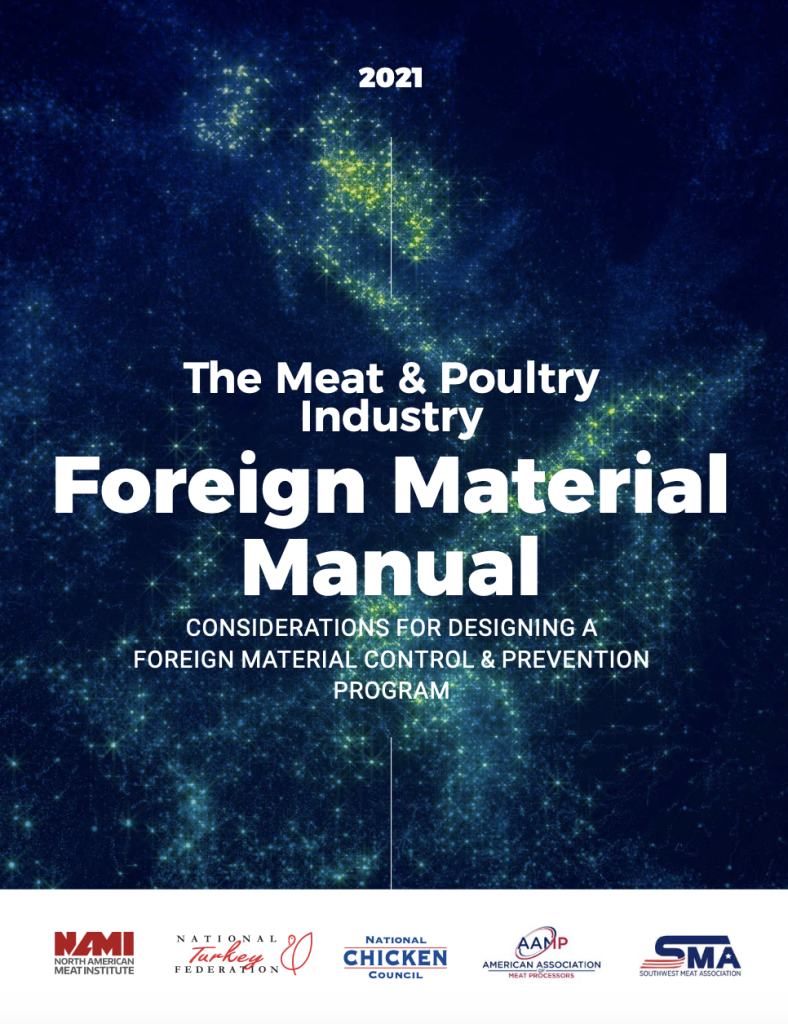
    More information about implementing FM detection strategies. https://www.automateandcontrol.com/?r3d=the-meat-poultry-industry-foreign-material-manual-2021-considerations-for-designing-a-foreign-material-control-prevention-program

    https://www.automateandcontrol.com/?r3d=the-meat-poultry-industry-foreign-material-manual-2021-considerations-for-designing-a-foreign-material-control-prevention-program
    https://www.automateandcontrol.com/?r3d=the-meat-poultry-industry-foreign-material-manual-2021-considerations-for-designing-a-foreign-material-control-prevention-program
  • Unveiling the Future: Exploring AI Advancements in Machine Vision at Machines Can See Conference

    In today’s rapidly evolving technological landscape, artificial intelligence (AI) continues to push boundaries and reshape industries. One area where AI is making significant strides is machine vision, the ability of machines to perceive and interpret visual information. Recently, I had the privilege of attending the prestigious Machines Can See Conference in Dubai as the Founder and CEO of Automate and Control LTD. This immersive event showcased cutting-edge advancements in AI-powered machine vision, leaving me inspired and excited about the limitless possibilities that lie ahead. In this blog post, I aim to share my experience and shed light on the remarkable innovations presented at the conference.

    The Machines Can See Conference: As I entered the grand conference hall, I was greeted by an electrifying atmosphere buzzing with anticipation. Professionals from diverse industries, ranging from manufacturing and robotics to healthcare and autonomous vehicles, had gathered to witness the unveiling of groundbreaking technologies. The conference’s focus on machine vision underscored the growing significance of this field in shaping the future of AI. Presentations came from Microsoft, Google, Dubai Future Labs and Meta to name a few.

    Automate-and-Control-at-Machines-CAn-See-2023-Dubai
    Automate-and-Control-at-Machines-Can-See-2023-Dubai

    Advancements in AI-Powered Machine Vision: Throughout the conference, experts from academia, research institutions, and industry giants took the stage to unveil their latest innovations, highlighting the remarkable progress made in AI-powered machine vision. Here are some key advancements that left a lasting impression:

    1. Deep Learning for Image Recognition: Several researchers presented advancements in deep learning algorithms for image recognition. They showcased models that outperformed human accuracy in tasks such as object recognition, facial recognition, and scene understanding. These breakthroughs hold immense potential for applications in security, surveillance, and autonomous systems.
    2. Real-Time Object Tracking: One of the highlights of the conference was the unveiling of real-time object tracking systems empowered by AI. These systems demonstrated an unprecedented ability to track objects accurately and efficiently across different environments, even in challenging scenarios with occlusions and varying lighting conditions. Such advancements have significant implications for robotics, self-driving cars, and logistics industries.
    3. Augmented Reality (AR) and Simultaneous Localization and Mapping (SLAM): Presenters showcased the fusion of machine vision with augmented reality and simultaneous localization and mapping techniques. This integration enables machines to perceive and interact with their surroundings in real-time, opening up possibilities for enhanced navigation, immersive gaming experiences, and improved maintenance and inspection processes.
    4. Medical Imaging and Diagnostics: The conference also dedicated a considerable focus to advancements in medical imaging and diagnostics. Researchers presented AI algorithms capable of detecting and diagnosing diseases from medical images with remarkable accuracy. These innovations have the potential to revolutionize healthcare, enabling earlier detection and more precise treatment planning.
    5. Edge Computing and Efficient Processing: With the exponential growth in data volume generated by machine vision systems, researchers emphasized the importance of efficient processing and edge computing. They presented novel hardware and software solutions that optimize the computational load, enabling real-time analysis and decision-making at the edge devices. This development is crucial for applications requiring low latency and reduced reliance on cloud infrastructure.
    Automate-and-Control-at-Machines-Can-See-2023-Dubai

    Conclusion: Attending the Machines Can See Conference in Dubai was a truly eye-opening experience, providing an invaluable glimpse into the advancements driving the future of AI-powered machine vision. The showcased innovations have the potential to revolutionize numerous industries, empowering machines with an unprecedented ability to perceive and understand the world around us. As the Founder and CEO of Automate and Control LTD, I am inspired by these advancements and excited about the possibilities they present for our company and the broader business landscape. It is clear that AI-powered machine vision will play a pivotal role in shaping the way we live, work, and interact with technology in the years to come.