Automate and Control LTD

Blog

  • Performance Level (PL) Explained: How SISTEMA Shapes the Way We Build Control Systems

    Performance Level (PL) Explained: How SISTEMA Shapes the Way We Build Control Systems

    A machine can be well-built, well-wired and still fail the one test that matters most: does it stop a person getting hurt? That question has a formal answer in machine safety — the Performance Level, or PL — and it’s become one of the most misunderstood parts of control systems design. Here’s how we think about it, and why it shapes every control system we build.

    What is Performance Level (PL)?

    EN ISO 13849-1 is the international standard for the safety-related parts of machine control systems. It defines Performance Level on a scale from a (lowest) to e (highest), describing how reliably a safety function — an emergency stop, a guard interlock, a light curtain — will do its job when it’s needed. Every safety function on a machine has a required PL, set by risk assessment, and an achieved PL, set by how the control system is actually built. The job of a control systems engineer is to make sure the second number is never lower than the first.

    Where SISTEMA fits in

    SISTEMA is a free software tool developed by the IFA — Germany’s Institute for Occupational Safety and Health — in cooperation with ZVEI and VDMA. It’s the de facto standard tool for modelling safety-related control architecture against EN ISO 13849-1, and it calculates the achieved PL from four inputs:

    • Category & architecture (B, 1, 2, 3 or 4) — how much redundancy and monitoring the safety function has
    • MTTFd — the mean time to dangerous failure of each component
    • DCavg — average diagnostic coverage, how well faults are detected
    • CCF — resistance to common cause failure

    Put those together and SISTEMA gives you a defensible, calculated PL — not a guess, and not a number pulled from a datasheet in isolation.

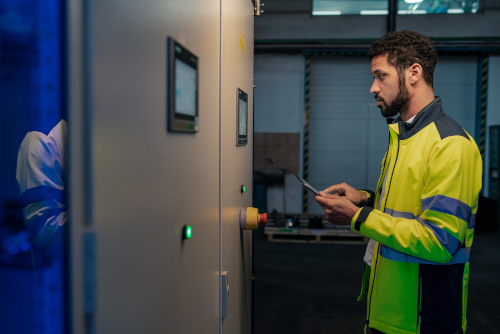
    Control systems engineering on the factory floor

    Why we build every system around it

    A lot of functional safety work happens backwards: a machine gets built, then someone checks whether it’s safe enough. We do it the other way round. The required PL for each safety function comes out of the risk assessment before detailed design starts, the control and safety architecture is chosen to meet it, and every function is modelled in SISTEMA to confirm the achieved PL — all before a cabinet is wired or a line of safety-PLC code is written. It’s a slower first step, and a much faster, cheaper project after that, because there’s no redesign-and-retest cycle waiting at the end.

    Upgrading machinery that falls short

    Most of the PL work we do isn’t on new machines — it’s on existing ones. A line gets modified, a risk assessment gets revisited, or a customer’s own safety review flags that a guard interlock or e-stop circuit no longer meets the PL the process now requires. We audit the existing safety functions, identify exactly where the gap is, and scope the most practical route to close it — sometimes a component swap and added diagnostics, sometimes a fuller re-architecture of the safety circuit. Either way, the upgrade gets re-modelled in SISTEMA and validated on-site, with documentation handed over for the machine’s safety file.

    Independent verification, not just our own sign-off

    On projects that call for it, we work alongside independent, certified functional safety specialists to verify our PL and SIL calculations. Our own SISTEMA modelling is the design tool; independent verification is what makes the compliance record hold up to audit, not just to our own review.

    Proven where compliance can’t be an afterthought

    A large part of our control systems and inspection work sits inside pharmaceutical and other GMP-regulated manufacturing environments, where documentation, traceability and validation evidence are non-negotiable. That discipline carries straight across into how we handle functional safety — the same rigour applied to product quality gets applied to the safety file.

    If a control systems project or a Performance Level upgrade is on your list, we’d be glad to talk it through.

  • Automate and Control LTD’s Predictive Shelf Life Technology: Enhancing Sustainability and Reducing Food Waste

    In the modern food industry, sustainability is a critical concern, with companies striving to minimize waste and maximize resource efficiency. Automate and Control LTD has stepped up to the challenge with their innovative predictive shelf life technology. This cutting-edge solution offers a proactive approach to managing the freshness and usability of perishable goods, ensuring that produce like blueberries reach consumers in optimal condition or are repurposed effectively to prevent waste.

    https://vimeo.com/981249843?share=copy

    Understanding Predictive Shelf Life Technology

    Predictive shelf life technology leverages advanced data analytics, machine learning algorithms, and real-time monitoring to predict the remaining shelf life of perishable products accurately. By analyzing various factors such as temperature, humidity, transportation conditions, and historical data, this technology can provide precise predictions about the freshness of produce at different stages of the supply chain.

    Benefits for Sustainability

    1. Reduction in Food WasteOne of the most significant benefits of predictive shelf life technology is the substantial reduction in food waste. For instance, if blueberries are nearing the end of their shelf life, the system can identify this and suggest alternative uses before they become unsellable. Instead of ending up in the trash, these blueberries can be diverted to be juiced, added to baked goods, or freeze-dried, thus extending their usability and preventing waste.
    2. Optimized Supply Chain Management By predicting the shelf life of products with high accuracy, companies can make more informed decisions about inventory management and distribution. This ensures that products that are still fit for consumption are prioritized for delivery to consumers, while those nearing their expiration are redirected to other production processes. This optimization leads to a more efficient supply chain, reducing unnecessary transportation and storage, which in turn lowers the carbon footprint.
    3. Enhanced Consumer Satisfaction Consumers often dispose of food because it spoils faster than expected after purchase. With predictive shelf life technology, companies can ensure that produce reaching the consumers’ homes is fresh and has a longer remaining shelf life. This increases consumer satisfaction and trust, as they are less likely to encounter spoiled or subpar products.
    4. Resource Efficiency Efficient use of resources is a cornerstone of sustainability. Predictive shelf life technology helps in making the most of the produce by identifying the best use case scenario for items nearing the end of their freshness. For example, blueberries that are too ripe for direct sale can be used in recipes, ensuring that all parts of the produce lifecycle are utilized effectively, thereby conserving resources.
    5. Support for Circular EconomyThis technology aligns with the principles of a circular economy, where products and materials are kept in use for as long as possible. By ensuring that blueberries and other produce are repurposed appropriately, Automate and Control LTD’s technology helps in creating a closed-loop system that minimizes waste and maximizes the value extracted from agricultural products.

    Practical Application: Blueberries Case Study

    Let’s take a closer look at how this technology benefits companies using blueberries as an example:

    • Fresh Produce Distribution: Blueberries with a predicted long shelf life are distributed as fresh produce to retail stores, ensuring consumers receive high-quality, fresh berries.
    • Juicing: If the predictive system identifies blueberries that won’t stay fresh until they reach the consumer, these can be immediately sent to juicing facilities. This not only prevents waste but also provides an additional revenue stream.
    • Baked Goods: Blueberries nearing the end of their freshness can be sent to bakeries where they can be incorporated into muffins, pies, and other baked goods. This use case ensures the berries are consumed in a timely manner and contribute to delicious products.
    • Freeze-Drying: Berries that are ripe but still in good condition can be freeze-dried, extending their shelf life significantly. Freeze-dried blueberries can be used in cereals, snacks, and even sold as a standalone product.

    Conclusion

    Automate and Control LTD’s predictive shelf life technology is a game-changer for the food industry, offering a sustainable solution to the pervasive problem of food waste. By accurately predicting the shelf life of produce, this technology ensures that food products are used optimally, whether as fresh produce or in value-added forms like juices, baked goods, or freeze-dried products. This innovation not only supports sustainability goals but also enhances supply chain efficiency, resource utilization, and consumer satisfaction. Companies adopting this technology are not only reducing their environmental impact but also paving the way for a more sustainable and efficient food industry.

  • Customer Sees Extra 10% Yield and an 11% Reduction in OPEX Costs from their Production Line, with the Introduction of CHAOS AI Machine Vision Systems, Implemented with Chaotic Line Packing Methodologies.

    In a groundbreaking development, a leading manufacturer has reported a remarkable 10% increase in yield from their production line following the implementation of CHAOS AI’s state-of-the-art machine vision systems, integrated with innovative chaotic line packing methodologies.

    Transforming Traditional Manufacturing

    The manufacturer, a prominent player in the industry, had been facing challenges in optimizing their production efficiency and minimizing defects. Traditional manufacturing processes often rely on static, predictable packing and sorting methodologies, which can lead to bottlenecks and inefficiencies. To address these issues, the company turned to CHAOS AI, a pioneer in artificial intelligence and machine vision technology.

    The Power of CHAOS AI

    CHAOS AI’s machine vision systems are designed to enhance the precision and speed of quality control processes. By leveraging advanced algorithms and real-time data analysis, these systems can detect even the smallest defects with unprecedented accuracy. This level of precision ensures that only the highest quality products move forward in the production process, significantly reducing waste and rework.

    However, what truly sets this implementation apart is the integration of chaotic line packing methodologies. Unlike traditional linear and static packing methods, chaotic line packing introduces an element of controlled randomness to the process. This approach optimizes space utilization and minimizes idle times, leading to a more fluid and efficient production line.

    Real-World Impact

    Since the introduction of CHAOS AI’s machine vision systems and chaotic line packing methodologies, the manufacturer has witnessed a notable 10% increase in their production yield. This improvement is attributed to several key factors:

    1. Enhanced Defect Detection: The machine vision systems identify defects early in the production process, preventing faulty products from advancing further and ensuring that resources are not wasted on subpar items.
    2. Optimized Space Utilization: Chaotic line packing methodologies make better use of available space, reducing the need for frequent line stoppages and adjustments.
    3. Increased Throughput: The combined effect of precise defect detection and efficient space utilization has resulted in a smoother, faster production line, ultimately boosting overall throughput.
    4. Reduced Waste: With fewer defects and a more efficient packing process, the manufacturer has seen a significant reduction in material waste, contributing to both cost savings and environmental sustainability.

    Operational Efficiencies and OPEX Cost Savings

    The implementation of CHAOS AI’s advanced machine vision systems and chaotic line packing methodologies has not only improved yield but also delivered substantial operational efficiencies and operational expenditure (OPEX) cost savings:

    1. Improved Resource Utilization: By optimizing space and reducing idle times, the chaotic line packing methodologies ensure that resources are used more effectively. This leads to lower operational costs as machines and labor are utilized more efficiently.
    2. Lower Maintenance Costs: Enhanced defect detection means fewer defective products reach the later stages of production, reducing wear and tear on machinery and minimizing downtime for repairs and maintenance. This directly translates to cost savings on equipment upkeep.
    3. Energy Efficiency: With optimized packing and streamlined processes, energy consumption is reduced. Machines operate more efficiently, and the overall energy footprint of the production line is decreased, resulting in lower utility costs.
    4. Reduced Labor Costs: Automation through CHAOS AI’s machine vision systems reduces the need for manual inspection and sorting, allowing labor to be redirected to more value-added tasks. This not only lowers labor costs but also increases workforce productivity.
    5. Minimized Waste Management Costs: With fewer defects and optimized processes, waste generation is significantly reduced. This lowers the costs associated with waste management, disposal, and recycling, contributing to overall cost savings.

    Looking Ahead

    The success of this implementation has not only improved the manufacturer’s bottom line but has also set a new standard for the industry. Other manufacturers are now looking to CHAOS AI’s innovative solutions to enhance their own production processes and achieve similar gains in efficiency and yield.

    In a statement, the manufacturer’s production manager expressed their satisfaction with the results: “The integration of CHAOS AI’s machine vision systems and chaotic line packing methodologies has been a game-changer for us. The 10% increase in yield is a testament to the power of these advanced technologies. We are excited to continue exploring new ways to optimize our operations and stay ahead in this competitive market.”

    Advancing Sustainability in the Food Industry

    CHAOS AI is committed to helping companies in the food industry achieve their sustainability targets. Our advanced machine vision systems and chaotic line packing methodologies significantly reduce waste by ensuring only the highest quality products proceed through the production line. This minimizes material waste and energy consumption, contributing to more sustainable operations. Furthermore, our systems optimize resource use, enhancing operational efficiency and reducing the carbon footprint. By integrating our technology, food manufacturers can not only boost their production yield but also advance their sustainability initiatives, aligning with global environmental standards and consumer expectations for greener practices.

    Conclusion

    The introduction of CHAOS AI machine vision systems, combined with chaotic line packing methodologies, represents a significant leap forward in manufacturing technology. As more companies adopt these innovative solutions, the industry can expect to see continued improvements in efficiency, yield, and overall performance, driving growth and competitiveness in the global market. With a strong focus on sustainability, CHAOS AI is poised to lead the way in creating a more efficient and environmentally friendly food production industry.

    Government Food Sustainability Requirements

    For those in the food industry looking to align with government sustainability requirements, several key guidelines and strategies have been put forth by various governments:

    1. United States: The USDA’s framework emphasizes investments in climate-smart agriculture, reduction of food waste, and support for resilient and inclusive food systems (USDA) (USDA). The EPA also outlines federal sustainability requirements focusing on reducing greenhouse gas emissions, conserving water, and managing waste (US EPA).
    2. European Union: The EU’s “Farm to Fork Strategy” aims to ensure that food systems have a neutral or positive environmental impact, help mitigate climate change, and ensure food security and public health while preserving affordability (Knowledge4Policy).
    3. United Kingdom: The UK government’s food strategy focuses on innovation in the food and drink sector, investment in skills training, and support for sustainable seafood production, emphasizing both economic and environmental sustainability (GOV.UK).
    4. Ireland: Ireland’s “Food Vision 2030” aims to make the country a leader in sustainable food systems by promoting biodiversity, improving water quality, and reducing food waste (Search for services or information).

    For more detailed information, you can visit the respective government pages:

    #Sustainability #FoodIndustry #CHAOSAI #MachineVision #ProductionEfficiency #ZeroWaste #GreenManufacturing #FoodSafety #ClimateSmartAgriculture #CircularEconomy

  • Revolutionizing Food Fraud Detection: Real-Time Chemical Imaging Coupled with AI & ML

    In today’s fast-paced world, ensuring the authenticity and safety of food products is paramount. At Automate and Control LTD, we are at the forefront of this revolution with our cutting-edge hyperspectral machine vision systems, seamlessly integrated with Machine Learning (ML) and Artificial Intelligence (AI). Our technology provides unparalleled real-time results, making it ideal for both laboratory settings and online applications.

    Combatting Food Fraud with Advanced Technology

    Food fraud is a significant global issue, affecting both consumers and industries. The economic impact and potential health risks necessitate robust solutions. Our systems excel in detecting various types of food fraud, ensuring the authenticity and quality of products such as:

    • Saffron: Known as one of the most expensive spices, saffron is frequently adulterated. Our hyperspectral imaging can detect even the slightest impurities or adulteration, safeguarding its purity.
    • Protein: Protein powders and supplements are prone to mislabeling and contamination. Our systems verify protein content and identify contaminants, ensuring product integrity.
    • Coffee: From distinguishing between Arabica and Robusta to identifying potential contaminants, our technology ensures every cup of coffee meets high standards of quality and authenticity.
    • Wheat: Wheat and wheat-based products are susceptible to adulteration. Our real-time imaging ensures the purity of wheat, protecting both producers and consumers.
    • Spices: Common spices like oregano are often mixed with cheaper substances. Our advanced systems detect these adulterants, maintaining the spice’s quality.
    • Fish: Mislabeling of fish species is a common issue. Our technology accurately identifies different fish species, ensuring correct labeling and consumer trust.

    How It Works

    Our hyperspectral machine vision systems analyze food products by capturing and processing information across a wide range of wavelengths. Coupled with AI and ML algorithms, the system learns and adapts, providing instant, precise results. This integration allows for:

    • Real-Time Analysis: Immediate detection and analysis of contaminants and adulterants.
    • High Accuracy: Advanced algorithms ensure high precision and reliability in results.
    • Adaptability: The system continuously improves its accuracy by learning from new data.

    The Future of Food Fraud Detection

    At Automate and Control LTD, we believe that the future of food fraud detection lies in the integration of advanced imaging technologies with AI and ML. Our mission is to provide solutions that not only enhance the efficiency of food safety processes but also build consumer trust through transparency and authenticity.

    For more information on how our hyperspectral machine vision systems can benefit your business, visit www.automateandcontrol.com/.

    Join us in this revolution and ensure the highest standards of food safety with real-time chemical imaging technology.

    #FoodFraudDetection #FoodSafety #AI #MachineLearning #HyperspectralImaging #RealTimeResults #Innovation #Technology #AutomateAndControl #QualityAssurance

  • AI & ML Powered Machine Vision Systems for the Food Industry – Transform Your Production Line with AI: 5-Minute Operator Programming for New SKUs

    In the dynamic and fast-paced world of the food industry, ensuring consistent quality and efficiency is paramount. At Automate and Control LTD, we understand the unique challenges faced by food manufacturers, particularly the need to adapt to ever-changing Stock Keeping Units (SKUs). Our advanced machine vision systems, powered by machine learning (ML) and artificial intelligence (AI), are designed to meet these demands head-on, transforming the way food processing and quality control are conducted.

    The Challenge of Ever-Changing SKUs

    The food industry is characterized by a wide variety of products, each with its own specific packaging, labeling, and quality requirements. As consumer preferences evolve and product lines expand, manufacturers must continually adjust their processes to accommodate new SKUs. Traditional vision systems often struggle to keep pace with these changes, leading to inefficiencies and increased costs.

    AI and ML: The Game Changers

    Machine learning and artificial intelligence have revolutionized the capabilities of vision systems. By leveraging these technologies, our systems can learn and adapt to new SKUs quickly and accurately. Here’s how:

    1. Dynamic Learning: Our vision systems utilize ML algorithms to continuously learn from new data. This enables them to recognize and adapt to new products and packaging with minimal reprogramming.
    2. Enhanced Accuracy: AI enhances the precision of our vision systems, ensuring that even the slightest deviations in product quality or packaging are detected. This leads to higher consistency and fewer errors.
    3. Scalability: As your product line grows, our AI-powered vision systems scale effortlessly, accommodating an increasing number of SKUs without compromising on performance.

    Simplified Deployment with 5-Minute Operator Training

    One of the standout features of our vision systems is the ease of deployment and operation. We recognize that time is of the essence in the food industry. That’s why we’ve designed our systems to be incredibly user-friendly, allowing for quick and efficient training of operators.

    With just 5 minutes of training, operators can:

    • Set Up and Calibrate: Our intuitive interface guides operators through the setup and calibration process, ensuring that the system is correctly configured for each specific SKU.
    • Monitor and Adjust: Real-time monitoring allows operators to make immediate adjustments, ensuring optimal performance at all times.
    • Maintain and Troubleshoot: Simple maintenance procedures and clear troubleshooting guides minimize downtime and keep production lines running smoothly.

    Real-World Impact

    Implementing our AI-powered vision systems in your production line can lead to significant improvements in efficiency, product quality, and cost savings. Here are some of the benefits our clients have experienced:

    • Reduced Waste: By catching defects early, our systems help reduce waste and ensure that only products meeting the highest standards reach the market.
    • Increased Throughput: Faster adaptation to new SKUs means less downtime and higher production rates.
    • Enhanced Compliance: Consistent quality control helps maintain compliance with industry standards and regulations, safeguarding your brand’s reputation.

    Partner with Automate and Control LTD

    At Automate and Control LTD, we are committed to driving innovation in the food industry. Our AI-powered machine vision systems represent the cutting edge of technology, designed to meet the specific needs of food manufacturers.

    Visit our website at www.automateandcontrol.com/ to learn more about how our solutions can revolutionize your production processes. Together, we can ensure that quality and efficiency are always on the menu.

  • Perfecting Strawberry Sweetness: Our bioClass® Automated System Grades Berries by Optimal Brix Levels

    Strawberries graded by Brix levels indicate their sugar content, which affects not only their sweetness but also their texture. A high Brix level, while ensuring sweetness, can lead to strawberries becoming dry. This is because higher sugar content increases osmotic pressure, drawing water out of the fruit and potentially resulting in a drier texture. Conversely, strawberries with a low Brix level can be hard and less flavorful because they have not developed sufficient sugar content and are often picked before they fully ripen.

    The ideal Brix level for strawberries is around 7-9. Levels below this range can result in a harder, less ripe fruit, while levels significantly above this range can cause the fruit to lose its moisture, making it dry and less enjoyable in terms of texture. Therefore, achieving the right balance in Brix levels is crucial for maintaining the optimal quality and texture of strawberries.

    Additionally, environmental conditions, cultivation practices, and harvest timing play essential roles in achieving the desired Brix levels without compromising the fruit’s quality.

    Contact us for the full report our trials that concluded an accuracy of Standard Deviation 0.3 BRIX CONTACT

    Introduction to Automated Sorting Machine for Grading Strawberries by Brix Content

    In the competitive world of strawberry production, ensuring consistent quality and taste is paramount. The Brix level, which measures the sugar content of the strawberries, plays a critical role in determining the fruit’s sweetness, texture, and overall consumer appeal. Automate and Control Ltd. has developed an advanced automated sorting machine that grades strawberries based on their Brix content, enhancing the efficiency and accuracy of the grading process.

    This innovative system utilizes the bioClass® TEST BED equipped with the ReG9 Algorithm and DiFluid Basic Refractometer to accurately measure the Brix levels of IQF (Individually Quick Frozen) strawberries. By automating the grading process, the machine aims to improve product quality, reduce the need for manual inspections, and ensure that 100% of the produce is inspected and graded correctly.

    During testing, the strawberries are scanned to measure their Brix levels. Samples are then defrosted, and three Brix measurements are taken using a refractometer to ensure no cross-contamination. These measurements are fed into the bioClass® ReG9 Algorithm, which processes the data to provide accurate grading results. The effectiveness of this system was demonstrated in a controlled trial, achieving a high standard of accuracy with minimal deviation.

    By implementing this automated sorting machine, producers can reliably offer premium-quality strawberries that meet high consumer expectations for sweetness and consistency, thereby enhancing their market reputation and reducing waste due to manual sorting errors.

    This technology represents a significant advancement in the agricultural industry, combining precision agriculture with automated processing to deliver superior quality produce to the market.

  • bioClass® Food Waste Removal Predictive Shelf Life Technology!

    Introducing bioClass® Food Waste Removal Equipment with Predictive Shelf Life Technology

    AutomateandControl.com proudly presents bioClass® Food Waste Removal Equipment, a revolutionary solution in the battle against food waste. Our cutting-edge technology utilizes chemical imaging for predictive shelf life analysis, ensuring that fruits and vegetables reach retailers in optimal condition, thereby minimizing waste.

    Predictive shelf life technology

    The Power of Predictive Technology

    At the core of bioClass® is its state-of-the-art predictive technology. Leveraging machine learning and artificial intelligence, our system offers next-generation food scanning capabilities. By analyzing factors such as color, texture, and chemical composition, bioClass® accurately predicts the shelf life of produce, allowing retailers to manage inventory more effectively and reduce spoilage.

    Unmatched Accuracy and Efficiency

    Our equipment doesn’t just sort and grade; it transforms post-harvest food management. By converting complex data into actionable insights, bioClass® helps streamline operations, enhance food safety, and boost profitability. bioClass® uses deep learning to adapt to varying crop conditions, ensuring consistent high performance and minimal product loss.

    A Sustainable Approach

    Sustainability is at the core of bioClass®’s design. By reducing food waste, we help lower the environmental impact of food production. Our technology is renowned for it’s efficiency and precision in removing defects and foreign materials from various produce.

    Real-Time Data for Better Decisions

    bioClass® also incorporates real-time data analysis, enabling processors to make informed decisions that enhance productivity and quality. This continuous feedback loop ensures that every piece of produce is utilized to its fullest potential, protecting both consumer health and the bottom line.

    Applicable Produce

    Our predictive shelf life technology can be used on a wide range of fruits and vegetables, including but not limited to:

    • Blueberries
    • Strawberries
    • Citrus fruits (oranges, lemons, limes)
    • Apples
    • Bananas
    • Grapes
    • Peaches
    • Pears
    • Cherries
    • Tomatoes
    • Bell peppers
    • Cucumbers
    • Lettuce
    • Spinach
    • Carrots
    • Potatoes

    Why Choose bioClass®?

    1. Advanced Predictive Imaging: Our chemical imaging technology predicts shelf life with remarkable accuracy.
    2. AI and Machine Learning Integration: Leverage cutting-edge AI to enhance sorting and grading processes.
    3. Sustainability Focused: Reduce food waste and environmental impact significantly.
    4. Real-Time Data Utilization: Make better, faster decisions with continuous data insights.
    5. High Efficiency and Low Waste: Achieve unmatched sorting accuracy, ensuring minimal waste and maximum yield.

    Experience the future of food waste management with bioClass® by AutomateandControl.com. Protect your resources, improve your profitability, and join us in creating a more sustainable food supply chain. Visit our website to learn more and schedule a demo today.

    FoodWasteReduction #Sustainability #PredictiveTechnology #AI #MachineLearning #FoodSafety #Innovation #SmartTechnology #RetailSolutions #Agritech #FutureOfFood

  • Introducing the Future of Food Industry Inspection: AI-Powered Vision Systems from Automate and Control

    In the fast-paced and ever-evolving food industry, maintaining the highest standards of quality and safety is paramount. Automate and Control is proud to introduce our latest innovation: AI-powered vision inspection systems designed specifically for the food industry. These cutting-edge systems are engineered to withstand the rigorous demands of food processing environments, featuring wash-down capable full stainless steel construction for ultimate durability and hygiene.

    Why Choose Our AI-Powered Vision Inspection Systems?

    1. Unmatched Precision and Accuracy
    • Utilizing the latest advancements in artificial intelligence and machine learning, our vision systems can detect even the smallest defects and inconsistencies, ensuring that only the highest quality products make it to your customers.
    1. Robust and Hygienic Design
    • Built with full stainless steel construction, our systems are designed to endure the harsh conditions of food processing environments, including frequent wash-downs and exposure to moisture, ensuring long-lasting performance and compliance with stringent hygiene standards.
    1. Versatile Inspection Capabilities
    • Our AI-powered systems can handle a wide range of inspection tasks, including:
      • Foreign Object Detection: Identifying and removing contaminants such as plastic, glass, and metal from your product stream.
      • Surface Defect Inspection: Detecting surface flaws such as cracks, discoloration, and other imperfections.
      • Shape and Size Sorting: Ensuring uniformity by sorting products based on shape and size criteria.
      • Color Analysis: Analyzing color consistency to maintain product quality and aesthetic standards.
      • Label and Packaging Verification: Ensuring that all labels and packaging meet regulatory and brand standards.
    1. Enhanced Efficiency and Productivity
    • By automating the inspection process, our systems reduce the need for manual inspection, speeding up production lines and reducing labor costs. The AI algorithms continuously learn and improve, increasing accuracy and efficiency over time.
    1. Easy Integration and Scalability
    • Designed to integrate seamlessly with existing production lines, our vision systems are scalable to meet the needs of small to large-scale operations, providing a flexible solution for businesses of all sizes.
    1. Data-Driven Insights
    • Our systems provide valuable data and insights, helping you to optimize your processes, reduce waste, and improve overall product quality. Real-time reporting and analytics allow for proactive decision-making and continuous improvement.

    Types of Inspection Our Systems Can Achieve

    Our AI-powered vision inspection systems are versatile and can be customized to suit various applications within the food industry. Some of the key inspection types include:

    • Random Product Sorting: Our systems can handle the sorting of random products with varying shapes, sizes, and colors, ensuring consistency and quality control.
    • Contaminant Detection: Identifying and eliminating foreign objects to ensure product safety and compliance with regulatory standards.
    • Quality Assurance: Monitoring and maintaining high standards of product quality by inspecting for defects, inconsistencies, and deviations.
    • Packaging and Labeling: Verifying the accuracy and integrity of packaging and labeling to ensure compliance with industry regulations and brand guidelines.

    Take Your Food Inspection to the Next Level

    At Automate and Control, we are committed to helping you achieve the highest standards of quality and efficiency in your food processing operations. Our AI-powered vision inspection systems are the ultimate solution for modern food industry challenges, providing unparalleled precision, durability, and versatility.

    Visit www.automateandcontrol.com/ to learn more about our innovative solutions and how we can help you transform your food inspection process. Connect with us on LinkedIn to stay updated on the latest advancements in machine vision technology.

    LinkedIn Hashtags: #FoodIndustry #AIPowered #MachineVision #Automation #FoodSafety #QualityControl #SmartManufacturing #IndustrialAutomation

  • The Growing Use of Machine Vision in the Food Industry

    Introduction

    The food industry is undergoing a significant transformation, driven by advancements in technology and automation. Among the most impactful innovations is the use of machine vision systems. These systems, which leverage high-resolution imaging and hyperspectral imaging technologies, are revolutionizing how food is processed, inspected, and packaged. Automate and Control LTD, a leading company based in the UK, is at the forefront of this revolution, offering custom vision inspection solutions tailored to the unique needs of the food industry. This article delves into the myriad applications of machine vision in the food industry, exploring its benefits, challenges, and future potential.

    What is Machine Vision?

    Machine vision refers to the technology and methods used to provide imaging-based automatic inspection and analysis for various applications. In the food industry, machine vision systems use cameras and image processing software to perform tasks such as quality control, sorting, and packaging. These systems can inspect food products for defects, measure their dimensions, and ensure they meet specific quality standards.

    Components of Machine Vision Systems

    1. Cameras: High-resolution cameras capture detailed images of food products. These images are essential for detecting minute defects and ensuring precise measurements.
    2. Lighting: Proper lighting is crucial for capturing clear images. Different lighting techniques, such as backlighting and coaxial lighting, are used depending on the application.
    3. Image Processing Software: This software analyzes the captured images, identifying defects, measuring dimensions, and performing other inspection tasks.
    4. Computers: Powerful computers process the images and run the image processing software. They also store the data and provide interfaces for operators to review results.

    Applications of Machine Vision in the Food Industry

    Quality Control and Inspection

    One of the primary applications of machine vision in the food industry is quality control. Machine vision systems can inspect food products for defects such as discoloration, bruises, and contamination. This ensures that only high-quality products reach consumers, reducing waste and improving customer satisfaction.

    Detection of Contaminants

    Machine vision systems can detect foreign objects such as metal, plastic, and glass in food products. By using hyperspectral imaging, these systems can also identify chemical contaminants, ensuring food safety and compliance with regulatory standards.

    Surface Inspection

    Machine vision systems can inspect the surface of food products for defects such as cracks, bruises, and discoloration. This is particularly important for fruits and vegetables, where surface quality is a key indicator of freshness and quality.

    Sorting and Grading

    Machine vision systems can sort and grade food products based on size, shape, color, and quality. This is particularly useful in the processing of fruits, vegetables, and nuts, where products must be sorted into different grades before packaging.

    Size and Shape Sorting

    Using high-resolution imaging, machine vision systems can measure the size and shape of food products with high precision. This allows for accurate sorting, ensuring that only products that meet specific criteria are packaged together.

    Color Sorting

    Color is an important quality attribute for many food products. Machine vision systems can sort products based on color, ensuring uniformity and meeting consumer expectations. This is especially useful for products like tomatoes, apples, and coffee beans.

    Packaging and Labeling

    Machine vision systems play a crucial role in the packaging and labeling of food products. They can inspect packaging for defects, ensure labels are correctly applied, and verify that the correct information is printed on labels.

    Packaging Inspection

    Machine vision systems can inspect packaging for defects such as dents, tears, and improper seals. This ensures that only properly packaged products reach consumers, reducing waste and improving customer satisfaction.

    Label Verification

    Labels must be accurately applied and contain the correct information. Machine vision systems can verify that labels are correctly positioned and that the printed information, such as expiration dates and barcodes, is accurate.

    Traceability and Compliance

    Traceability is a critical aspect of food safety and compliance. Machine vision systems can track food products through the production process, ensuring that each product can be traced back to its source.

    Barcode and QR Code Scanning

    Machine vision systems can read barcodes and QR codes on food products, providing a means of tracking products through the supply chain. This is essential for traceability and compliance with food safety regulations.

    Batch Tracking

    By tracking batches of food products, machine vision systems can help identify the source of any quality issues. This allows for quick and effective recalls, minimizing the impact on consumers and the company’s reputation.

    Hyperspectral Imaging in the Food Industry

    Hyperspectral imaging is an advanced technology that captures a wide spectrum of light, providing detailed information about the chemical composition of food products. This technology is particularly useful for detecting contaminants and assessing the quality of food products.

    Chemical Imaging

    Hyperspectral imaging can detect chemical contaminants that are invisible to the naked eye. This includes pesticides, antibiotics, and other harmful substances. By identifying these contaminants, hyperspectral imaging ensures that food products are safe for consumption.

    Ripeness and Freshness Assessment

    Hyperspectral imaging can assess the ripeness and freshness of food products by analyzing their chemical composition. This is particularly useful for fruits and vegetables, where ripeness is a key quality attribute.

    Nutritional Analysis

    Hyperspectral imaging can provide detailed information about the nutritional content of food products. This includes measuring levels of vitamins, minerals, and other nutrients. This information can be used to ensure that products meet nutritional standards and provide consumers with accurate information.

    Benefits of Machine Vision in the Food Industry

    Improved Quality Control

    Machine vision systems provide a high level of accuracy and consistency in quality control. They can detect defects and contaminants that are difficult or impossible for human inspectors to see, ensuring that only high-quality products reach consumers.

    Increased Efficiency

    By automating inspection and sorting processes, machine vision systems increase the efficiency of food production. This reduces the need for manual labor, lowers production costs, and increases throughput.

    Enhanced Food Safety

    Machine vision systems play a crucial role in ensuring food safety. They can detect contaminants, verify labels, and track products through the supply chain, ensuring compliance with food safety regulations.

    Cost Savings

    While the initial investment in machine vision systems can be significant, the long-term cost savings are substantial. By reducing waste, improving efficiency, and enhancing food safety, machine vision systems provide a strong return on investment.

    Challenges and Considerations

    High Initial Investment

    The initial cost of implementing machine vision systems can be high. This includes the cost of cameras, lighting, image processing software, and computers. However, the long-term benefits and cost savings often justify the investment.

    Integration with Existing Systems

    Integrating machine vision systems with existing production lines can be challenging. This requires careful planning and coordination to ensure that the new systems work seamlessly with existing equipment.

    Maintenance and Calibration

    Machine vision systems require regular maintenance and calibration to ensure they operate at peak performance. This includes cleaning cameras and lenses, calibrating lighting, and updating software.

    Data Management

    Machine vision systems generate large amounts of data, which must be stored, managed, and analyzed. This requires robust data management systems and skilled personnel to interpret the data and make informed decisions.

    The Future of Machine Vision in the Food Industry

    The future of machine vision in the food industry looks promising, with ongoing advancements in technology and increasing adoption by food producers. Here are some key trends and developments to watch:

    Artificial Intelligence and Machine Learning

    The integration of artificial intelligence (AI) and machine learning with machine vision systems is a significant trend. AI algorithms can analyze images more effectively, improving the accuracy and efficiency of inspection and sorting processes.

    Edge Computing

    Edge computing, which involves processing data closer to where it is generated, is becoming increasingly important. By processing data on the edge, machine vision systems can operate faster and more efficiently, reducing the need for large-scale data centers.

    Collaborative Robots

    Collaborative robots, or cobots, are designed to work alongside human operators. Integrating machine vision with cobots can enhance their capabilities, allowing for more complex and flexible automation in the food industry.

    Advanced Imaging Technologies

    Advancements in imaging technologies, such as 3D imaging and multispectral imaging, are expanding the capabilities of machine vision systems. These technologies provide more detailed information about food products, improving the accuracy of inspection and sorting processes.

    Conclusion

    Machine vision is transforming the food industry, offering significant benefits in terms of quality control, efficiency, and food safety. Automate and Control LTD is at the forefront of this revolution, providing custom vision inspection solutions tailored to the unique needs of the food industry. With ongoing advancements in technology and increasing adoption by food producers, the future of machine vision in the food industry looks bright.

    As we move forward, it is essential for food producers to embrace these technologies and invest in the future of their operations. By doing so, they can ensure the highest standards of quality and safety, meet consumer expectations, and stay competitive in an ever-evolving market.